Sound Gym
think · sink
Same vowel /ɪ/ and same ending /ŋk/ — only the initial consonant differs: dental /θ/ vs alveolar /s/.

verb — to use your mind to reason or form ideas — 'what do you think?' · 'I think so' · 'think carefully' · 'think outside the box'
mouth shape
dental fricative /θ/ + short /ɪ/ + /ŋk/ — /θ/ requires the tongue tip between or just behind the teeth — breathe air over it — no voice for /θ/
think
/θɪŋk/
vowel length
plays as: “think carefully”
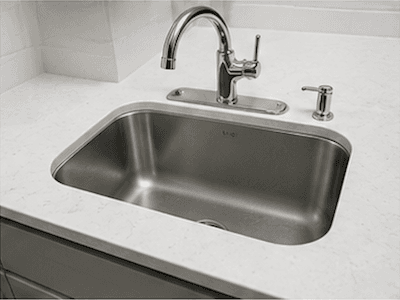
noun or verb — a basin with a drain for washing up; OR to go below a surface — 'wash up in the sink' · 'the ship began to sink' · 'hearts sink'
mouth shape
alveolar fricative /s/ + short /ɪ/ + /ŋk/ — /s/ is made behind the teeth with tongue NOT touching them — same vowel and ending as think, different initial consonant
sink
/sɪŋk/
vowel length
plays as: “kitchen sink”
Initial consonant spotlight — tongue placement
/θ/ — dental fricative (think)
Tongue between/behind the teeth
Stick your tongue out slightly, then breathe air over it. A soft “th” sound — voiceless, like a quiet hiss.
think · thank · thick · thin · three · moth
/s/ — alveolar fricative (sink)
Tongue stays behind the teeth
Tongue tip near the ridge behind upper teeth — does NOT touch the teeth. A sharp “s” hiss, more focused than /θ/.
sink · sit · sell · six · last · miss
Key difference — a classic non-native speaker trap
Many non-native speakers replace /θ/ with /s/— saying “sink” when they mean “think”. The fix: for think, let your tongue touch your top teeth or peep between them, then breathe out. For sink, pull the tongue back — it does not touch the teeth. Same vowel /ɪ/ and same ending /ŋk/ — only the tongue placement at the start changes.
Example sentences
think:“I need to think before I answer that question.”
think:“What do you think about the new proposal?”
sink:“Leave the dishes in the sink for now.”
sink:“The boat began to sink after hitting the reef.”
Hear it in a sentence
“Take a moment to think before you reply to that email.”
“The dirty dishes piled up in the sink over the long weekend.”
Hear it in the wild
Real speech from native speakers — the most reliable way to check a pronunciation, since automated audio can vary by device and browser.
think
Hear native speakers say “think” in real sentences — news, lectures, and podcasts.
Opens YouTube-sourced clips in a new tab.
sink
Hear native speakers say “sink” in real sentences — news, lectures, and podcasts.
Opens YouTube-sourced clips in a new tab.
How teachers explain this
Approved tips from the community, sorted by helpfulness
Word families
think family ▸
sink family ▸
Comments
Comments are reviewed before they appear publicly.