sing · sink
sing is /sɪŋ/. sink is /sɪŋk/ — the same sound plus a final /k/. Drop the /k/ and sink becomes sing.
Same start, one extra sound at the end: sing /sɪŋ/ stops at the nasal /ŋ/. sink /sɪŋk/ keeps going — the tongue pushes off the soft palate to add a final /k/.

verb — to make music with your voice — 'sing a song' · 'she sings beautifully' · 'sing along'
mouth shape
short /ɪ/ — tongue high and forward, mouth almost closed — ends in the nasal /ŋ/, back of tongue against the soft palate, no final consonant after it
sing
/sɪŋ/
vowel length
plays as: “sing along”
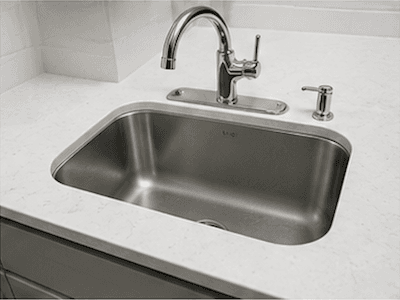
noun or verb — a basin with a drain for washing up; OR to go below a surface — 'wash up in the sink' · 'the ship began to sink' · 'hearts sink'
mouth shape
same short /ɪ/ and nasal /ŋ/ as sing — but sink adds a final /k/ stop, tongue pushing off the soft palate to close the word
sink
/sɪŋk/
vowel length
plays as: “kitchen sink”
Key difference
Say “sing” and hold the last sound — your mouth stays open on the nasal hum /ŋ/. Now say “sink”: the same hum, but your tongue then taps off the roof of your mouth to close it with a crisp /k/. If the /k/ disappears, sink sounds exactly like sing.
Example sentences
sing:“Can you sing that song again?”
sing:“The birds sing every morning.”
sink:“Leave the dishes in the sink for now.”
sink:“The boat began to sink after hitting the reef.”
Hear it in the wild
Real speech from native speakers — the most reliable way to check a pronunciation, since automated audio can vary by device and browser.
sing
Hear native speakers say “sing” in real sentences — news, lectures, and podcasts.
Opens YouTube-sourced clips in a new tab.
sink
Hear native speakers say “sink” in real sentences — news, lectures, and podcasts.
Opens YouTube-sourced clips in a new tab.
How teachers explain this
Approved tips from the community, sorted by helpfulness
Word families
sing family ▸
sink family ▸
Related pairs
Comments
Comments are reviewed before they appear publicly.